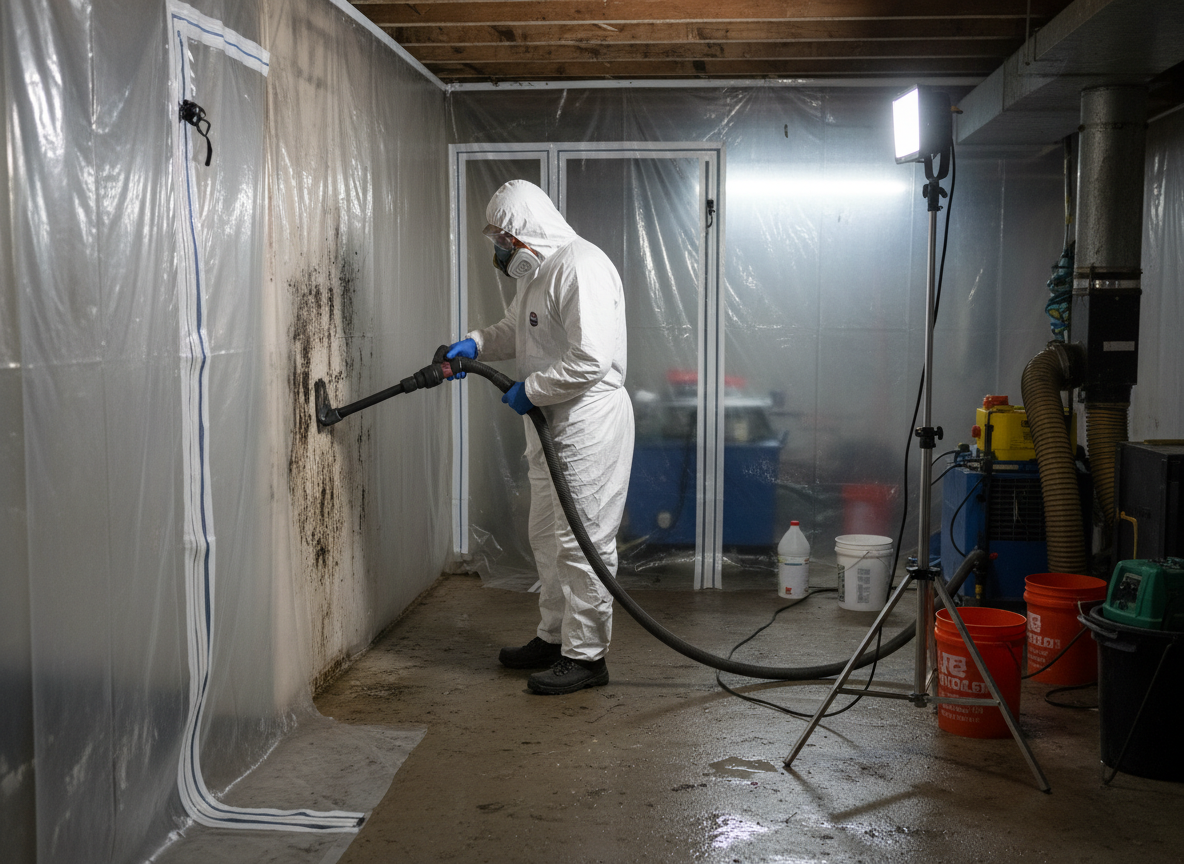
Amarillo's semiarid climate brings hot summers that dry surfaces fast but cold winters that drive condensation inside walls and crawl spaces of older homes in Wolflin and Plemons-Eakle. When pipes freeze and burst, moisture sits behind plaster or in the soil around foundations common to Potter County properties, allowing mold to spread before homeowners notice musty odors. Restoration crews must map moisture with meters rather than relying on visible stains because the dry air outside masks ongoing interior growth.
Route 66 Historic District and The Colonies homes often feature mixed materials from multiple decades of additions, creating pockets where water from nearby Borger or Canyon flooding events travels along joists. Remediation requires isolating HVAC systems early to prevent spores from moving through ductwork during extraction. Failure to address the source in these older builds leads to repeat growth once winter temperatures drop again and new condensation forms.
Technicians working Downtown Amarillo jobs frequently encounter slab leaks under concrete that feed mold along carpet tack strips and baseboards. Removing affected drywall while preserving load-bearing elements demands careful cutting patterns that respect the age of the structures. Post-remediation drying focuses on pulling air through the semiarid environment to reach low moisture readings before any new finishes go on.
Technician insight
In Amarillo, the thing that catches most people out with Mold Remediation is older homes in Plemons-Eakle where cold winters cause repeated pipe leaks that soak into dirt crawl spaces, letting mold return every season until the soil itself is treated.
Hidden Growth After Winter Pipe Burst
A Wolflin homeowner noticed odors after a January freeze. Inspection found water had traveled under the slab into insulation. Crews contained the space, removed saturated materials, treated the soil, and dried the structure over several days until readings stabilized.
Mold Remediation Services We Offer
✓Black Mold Containment
Isolate affected rooms in Wolflin homes using negative air machines to stop spores from reaching unaffected areas during removal.
✓Crawl Space Mold Treatment
Treat soil and joists under Plemons-Eakle properties where winter pipe bursts create persistent damp conditions below floor level.
✓Attic Mold Removal
Clear insulation and rafters in The Colonies homes where roof leaks combined with summer heat trap moisture in poorly ventilated spaces.
✓HVAC Duct Mold Cleaning
Clean and sanitize ductwork in Downtown Amarillo buildings to eliminate spread after water intrusion reaches central systems.
✓Drywall and Insulation Replacement
Remove and replace saturated materials in Potter County homes while maintaining structural integrity during the drying phase.
Mold Remediation Cost in Amarillo, TX
| Service | Typical Range | What Affects It |
|---|---|---|
| Small Contained Area | $400–$900 | Single room under 100 sq ft with visible growth only |
| Crawl Space Treatment | $800–$1,800 | Includes soil treatment and ventilation adjustments |
| Full Wall Section | $1,200–$2,500 | Multiple rooms with insulation and drywall replacement |
| HVAC System Cleaning | $600–$1,400 | Ductwork inspection and remediation after water event |
Ranges are typical for Amarillo, TX and confirmed with an exact written quote before any work starts.
How it works
- 1
Moisture Mapping
Use meters to locate hidden water in walls and floors of Amarillo homes, focusing on areas prone to winter condensation.
- 2
Containment Setup
Seal off sections with plastic barriers and negative pressure to protect the rest of the property during work.
- 3
Material Removal
Cut out and dispose of mold-affected drywall, insulation, and flooring following local disposal guidelines.
- 4
Drying And Treatment
Apply antimicrobial solutions then run dehumidifiers until readings meet dry standards for the semiarid climate.
- 5
Final Clearance
Re-test surfaces and provide documentation before any reconstruction begins.
Pricing
Upfront quotes after on-site inspection; costs vary by extent of hidden growth and access challenges in older Potter County homes.