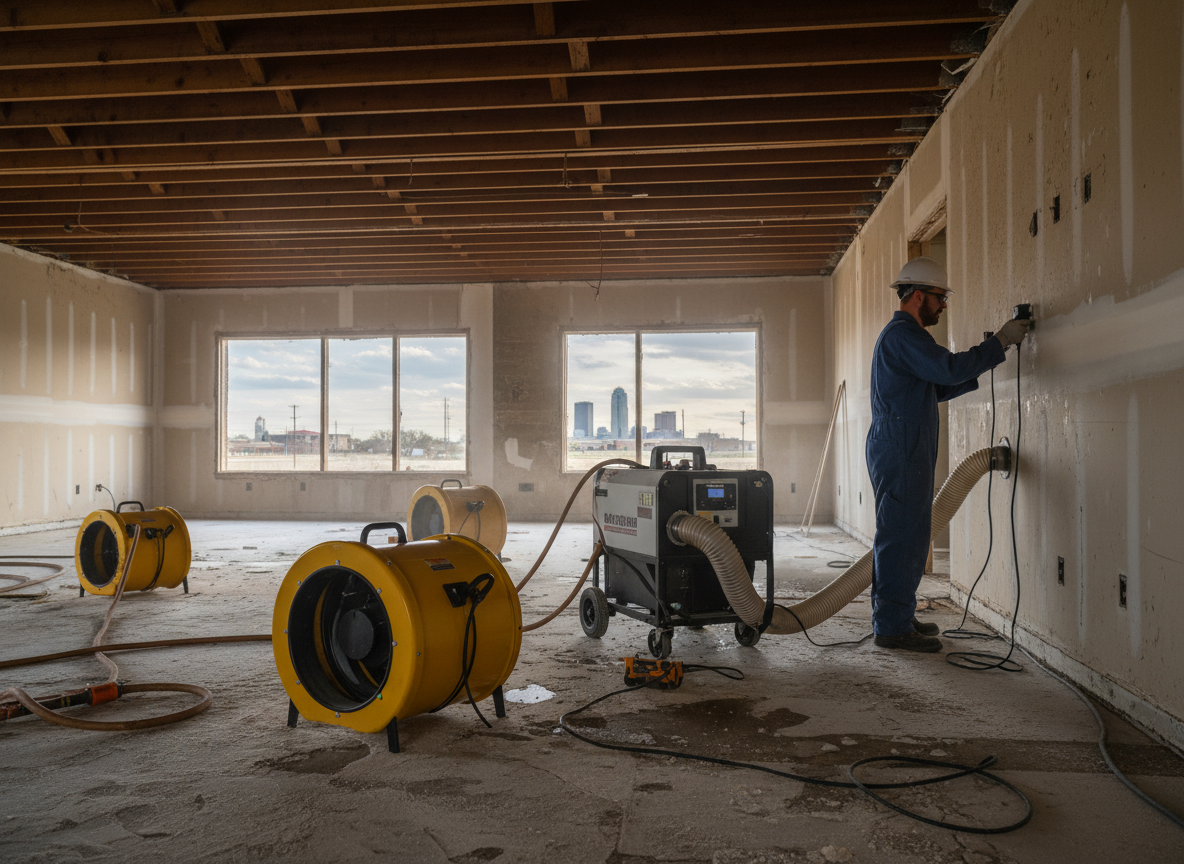
In Potter County homes built before 1970, especially those in the Plemons-Eakle and Wolflin neighborhoods, plaster and lathe walls hold moisture longer than modern drywall because the dense materials resist airflow. After a pipe burst or roof leak, we place air movers at floor level to push trapped water vapor out while monitoring wall cavities with moisture meters to avoid hidden pockets that later cause musty odors. The semiarid climate helps in summer when low humidity speeds evaporation, but cold winter nights in The Colonies can slow the process and require longer equipment runtime to reach safe moisture levels below 15 percent.
Route 66 Historic District properties often feature mixed construction with original wood framing next to later additions, creating cold joints where water migrates and stays hidden behind baseboards. We use commercial dehumidifiers sized for the actual cubic footage rather than guessing, because undersized units leave residual moisture that leads to cupping hardwood floors common in older Amarillo stock. Nearby cities like Canyon and Borger share similar clay-heavy soils that push groundwater toward foundations during heavy spring rains, so we always check slab edges first before setting up drying zones.
Edge cases include finished basements in newer Colonies homes where vapor barriers under carpet trap moisture against concrete, requiring removal of flooring sections for proper airflow. We never seal a structure until readings confirm equilibrium with outdoor conditions, because Amarillo’s wide daily temperature swings can otherwise pull moisture back into walls overnight.
Technician insight
In Amarillo the thing that catches most people out with structural drying is how quickly moisture hides in the dense plaster of 1950s Wolflin homes during our cold winters; they turn the heat up thinking it will help, but that just drives vapor deeper into the walls until we get proper airflow behind the baseboards.
Plemons-Eakle Home After Pipe Burst
A kitchen supply line leaked behind cabinets in a 1962 Plemons-Eakle house. Moisture had wicked into plaster walls and under the oak floor. We mapped readings, set up wall injectors and floor mats, and ran equipment through a cold snap until all cavities tested dry. The floor stayed flat and no mold appeared.
Structural Drying & Dehumidification Services We Offer
✓Moisture Mapping and Documentation
Room-by-room meter readings and photo logs that identify every wet material before drying begins so no hidden pockets remain in Wolflin or Downtown Amarillo homes.
✓Air Mover Placement and Airflow Design
Strategic positioning of high-velocity fans to create directed airflow across wet studs, subfloors, and plaster in older Potter County properties.
✓Commercial Dehumidifier Setup
Right-sized refrigerant or desiccant units that pull moisture from the air while maintaining safe temperatures in both summer heat and winter cold.
✓Wall and Cavity Drying
Injection drying systems that push warm dry air behind baseboards and into wall cavities common in pre-1970 Amarillo construction.
✓Hardwood Floor Drying
Specialized mats and low-profile equipment that lift moisture from tongue-and-groove floors without causing cupping in historic Route 66 district homes.
Structural Drying & Dehumidification Cost in Amarillo, TX
| Service | Typical Range | What Affects It |
|---|---|---|
| Single Room Drying Setup | $350–$650 | Higher in older plaster homes or when winter temperatures slow evaporation. |
| Whole Floor Drying | $900–$1800 | Varies with number of dehumidifiers needed and access to wall cavities. |
| Hardwood Floor Drying Add-On | $250–$500 | Extra for specialized mats on tongue-and-groove floors. |
Ranges are typical for Amarillo, TX and confirmed with an exact written quote before any work starts.
How it works
- 1
Initial Moisture Assessment
We walk the affected rooms with meters and note readings on every surface, paying special attention to slab edges and older plaster walls typical in Wolflin.
- 2
Equipment Layout
Air movers and dehumidifiers are placed according to the floor plan and construction type so airflow reaches every wet material without creating new cold spots.
- 3
Daily Monitoring
Return visits check moisture levels and adjust equipment until readings stabilize at safe levels for the local climate.
- 4
Final Verification
Final meter checks and documentation confirm the structure is dry before equipment removal.
Pricing
Cost depends on square footage affected, construction type, and number of days equipment must run.